
On Site
Operational products need to work in live, complex environments where teams make decisions quickly.

A centralised function that guides through expertise, builds capability in domain teams, and creates the cross-domain visibility that no single team can achieve alone.


The CoE is an advisory and strategic change agent, providing an enterprise view, connecting decisions to evidence, and coaching the business on language, process, and discipline. It indirectly strengthens Ampol Group's four customer domains.
Operational products need to work in live, complex environments where teams make decisions quickly.

Mobility offers need to be clear and dependable for teams managing routes, assets and work on the move.

Retail experiences across fuel, EV, food and convenience should feel simple, useful and easy to repeat.

Payment and app experiences should connect the portfolio with a seamless digital layer for customers.
The CoE formed to help solve three key business problems and facilitate increased product performance across Ampol Group.
Ampol Group has established definitions for product as well as supporting enablers and magnifiers. Four customer domains are also described below.
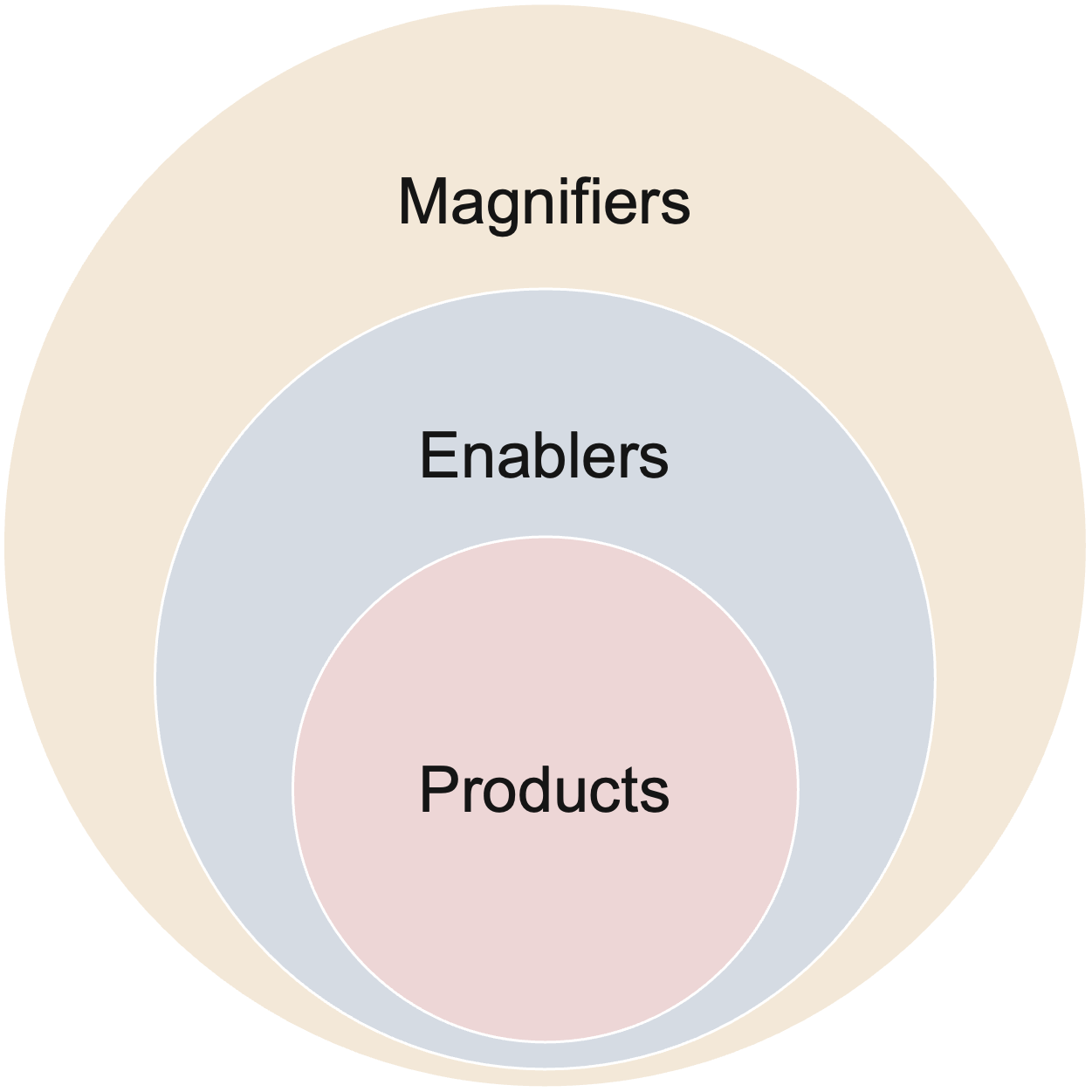
Offerings that are directly bought, subscribed to, or consumed by customers and generate value and revenue.
Systems, capabilities, and infrastructure that allow products to function and scale.
Features that amplify reach, differentiation, and competitiveness of the core product offer.
Secure digital and payment experiences that unify mobility and energy offerings.
Convenient and predictable experiences across fuel, EV charging, food and amenities.
Reliable fuel, lubricant and energy solutions that prioritise safety, continuity and uptime.
Integrated mobility solutions that optimise cost and simplify fleet operations.
The CoE is an advisory group but will be involved in highlighting where there are risks and opportunities that need attention.
The CoE shares frameworks, provides coaching, documents observations, and reports insights. Domain teams decide whether and how to act.
Support is always accompanied by a specific action plan — what will be done, by whom, by when.
When the CoE identifies systemic risk, ownership gaps, or persistent non-compliance, it raises these risks with evidence to the appropriate leadership forum.
The CoE will seek to ensure there is clear ownership clarity and portfolio-level risk have the right accountabilities.

When the CoE is live and working well, this is what the business will see, hear, and experience.
Ownership of products remains with business units. The CoE works with the business to support product reviews and lifecycle management. It does not take over accountability for product performance.
Ownership of products remains with business units. The CoE works with the business and does not take over accountability for product performance. Filter the matrix to see where authority sits.
| Area | Authority | In practice |
|---|---|---|
| Dashboard metrics & reporting | Decide | Defines what gets measured and how it is reported at portfolio level. |
| Template & artefact design | Decide | Owns design and maintenance of lifecycle artefacts, stage transition templates, and assessment tools. |
| Lifecycle gate criteria | Decide | Defines what each lifecycle stage transition requires. Domain teams apply the criteria to their products. |
| Product classification | Decide | Determines what counts as a Product, Enabler, or Magnifier. |
| Cross-domain coordination | Decide | Convenes domain teams when dependencies or overlaps are identified. |
| Portfolio prioritisation | Recommend | Provides evidence-based recommendations at group level. Decisions sit with domain leadership and executive forums. |
| Lifecycle stage transitions | Recommend | Proposes stage changes (including launch and retirement) based on evidence. Domains decide. |
| Owner assignment | Recommend | Identifies ownership gaps and recommends named owners. Domain leadership decides. |
| Capability assessment | Recommend | Evaluates product maturity and recommends capability interventions. |
| Day-to-day product delivery | Out of scope | Operational product management remains with domain teams. |
| Domain commercial decisions | Out of scope | The CoE provides evidence; domains make commercial decisions. |
| Technology platform choices | Out of scope | Technology decisions sit with Technology, Digital and Data. |
| Customer research execution | Out of scope | The CoE ensures evidence is used — it does not conduct the research. |
| Product & CX design execution | Out of scope | Design execution is a domain capability and not a CoE function. |
The following summarises what would be seen if the CoE is successful.
Ambiguity about who owns products and Enablers in target domains has measurably reduced. Named lifecycle owners exist where they did not before.
Lifecycle terminology and the Product / Enabler / Magnifier model are used consistently in governance forums, reviews, and everyday conversations.
Domain teams proactively request CoE help, facilitation, and input into product decisions rather than the CoE having to insert itself.
Cross-domain risks and dependencies are identified through CoE activity, business stakeholders are acting on them, and the CoE is consulted early in product-related decisions. Evidence-based, prioritised roadmaps exist for target products.
CoE tools and artefacts have been designed, developed, launched and are in use across the business.
Ownership in forums and decision-making is clearer with artefacts being used to reconcile accountabilities (e.g. use of RACI).
The Product Playbook is being used to guide development and management decisions across the business.
There is overall increased evidence of customer domain performance, which means the understanding of our customers has increased and ultimately increased our Ampol Group product performance.
This charter is endorsed by the following signatories, confirming the mandate, scope, and authority of the Product Centre of Excellence.